October 15, 2026

Two Roadsters

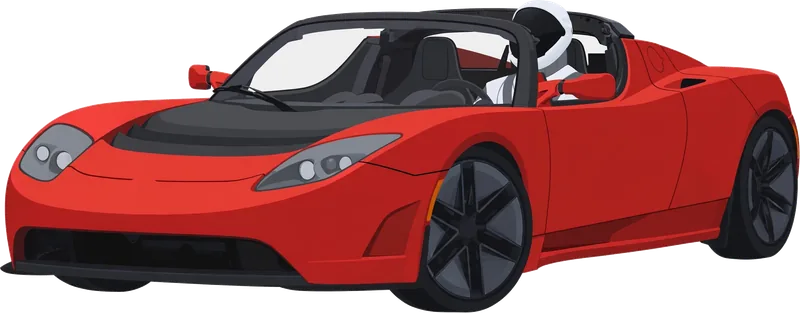
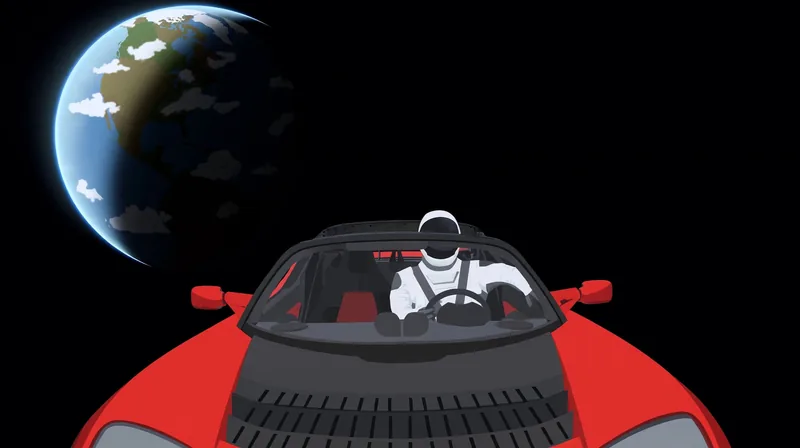
The 2008 Roadster that Falcon Heavy launched on February 6, 2018, with a mannequin called Starman at the wheel, is still circling the Sun. On October 15, 2026, its successor hopped over a row of parked Teslas at SpaceX's McGregor test site in Texas.

Tesla's recording of the event on YouTube, 7:55 pm CT on October 15, 2026.

Then and now

Eight years apart

One Roadster went to space on a rocket. The next one borrowed a little of the rocket.

The 2018 payload

Orbiting the Sun

Falcon Heavy's first flight needed a test mass, and SpaceX sent a car. It left Earth for good and loops between the orbits of Earth and Mars.

Car2008 first-generation Roadster
LaunchedFeb 6, 2018, 20:45 UTC
RocketFalcon Heavy, first flight
PadLC-39A, Kennedy Space Center
At the wheelStarman, a mannequin
One lap of the Sun~557 days
Closest to the Sun147.5 million km / 91.7 million mi
Farthest from the Sun249.0 million km / 154.7 million mi

Orbit figures for October 16, 2026. Sources: NASA JPL Horizons, Where is Roadster?.

The 2026 car

Production target 2028

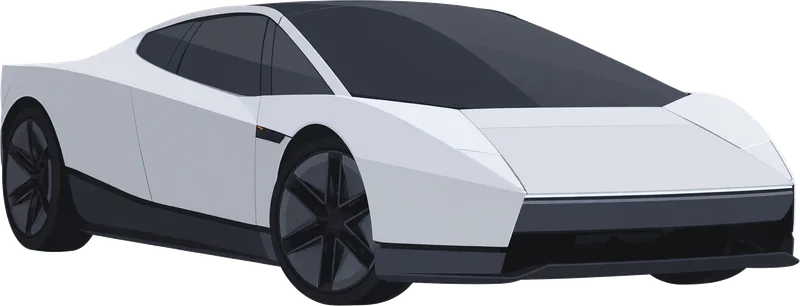
The second-generation Roadster, first shown in 2017 and revealed on October 15, 2026: one car, Performance, with two augments that add cold-gas thrusters.

CarSecond-generation Roadster
First shownNov 16, 2017
RevealedOct 15, 2026, McGregor, Texas
Offered asPerformance, plus Thrust and Rocket augments
0–60 mph, ThrustUnder 1 s
ThrustersCold gas, electric actuators
SuctionHolds it upside down, even standing still

From Tesla's Roadster page, checked October 16, 2026. The production target is reported from the reveal, not on Tesla's page. Sources: Tesla, Roadster page, Drive Tesla Canada.

The car itself, on our sister site GetTesla
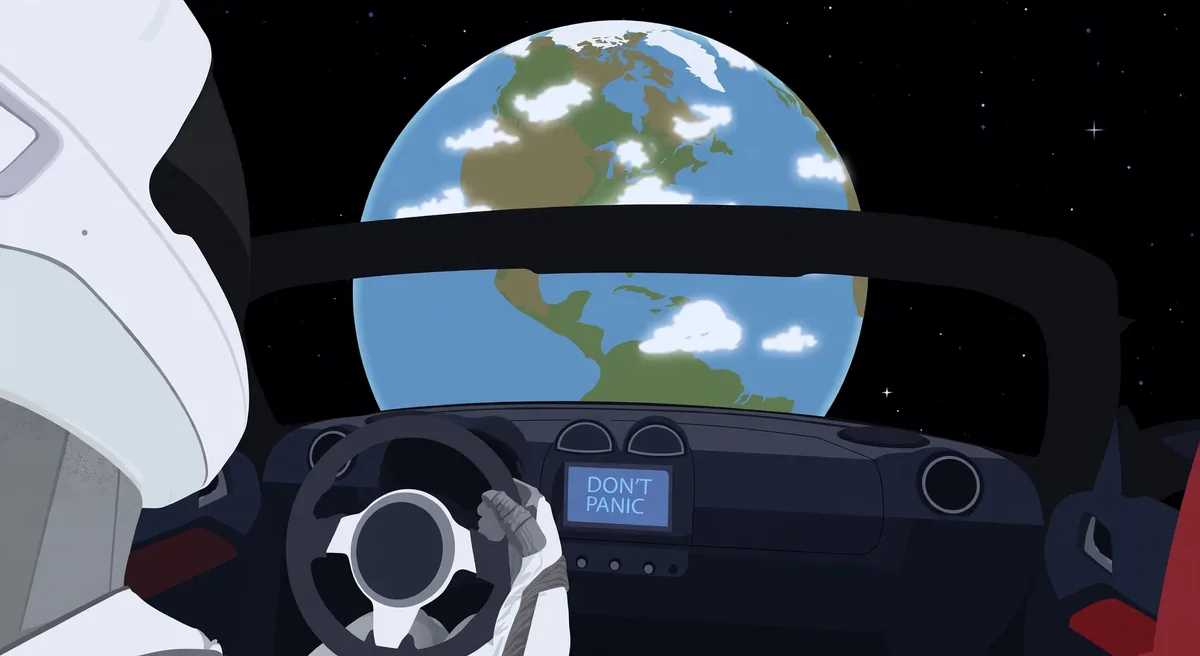
Illustration of Earth seen from Starman's seat, the dashboard screen reading Don't Panic
Starman's view of home, as our illustration imagines it.

The rocket part

How a car hops

Every hop is Newton's third law. The car carries a tank of compressed air: about 600 litres, Tesla engineering VP Lars Moravy told TechCrunch at the reveal (a figure not on Tesla's page). Open a valve and the air rushes out through a nozzle; pushing the gas one way pushes the car the other. Nothing burns, so this is called a cold-gas thruster.

Cold gas is the gentlest kind of thruster. With no combustion to heat it, the gas leaves the nozzle at a few hundred metres per second, far slower than a rocket engine's exhaust, so the supply is good for short bursts rather than sustained flight. That suits hops and flips, and the air can be pumped back in afterwards.

Holding air at high pressure takes strong, light tanks. Tesla's page says the car carries SpaceX components, and at the reveal Tesla said it packs the car's spare spaces with carbon-fibre-overwrapped pressure vessels, or COPVs: a thin liner wrapped in carbon fibre. They are the tank type SpaceX flies on its rockets.

Two more systems keep it steady. Fans and a ground seal pull air out from under the car, so the higher air pressure around it presses it against the surface. Tesla says that is enough to hold the car upside down, even when it is standing still, and powered fans and active wings give it downforce at zero speed. At the reveal it clung to an upside-down ramp, let go, rolled over in mid-air and landed on its wheels. On the thrusters, all-electric actuators make tiny corrections within a fraction of a second to keep it steady in the air.

Same idea, on Falcon 9

Falcon 9 uses cold-gas thrusters too, with nitrogen. Small nitrogen thrusters turn and steady both stages: the first stage uses them, with its grid fins, to flip around and line up for landing, and the second stage uses them to point itself while it coasts. Not every SpaceX thruster is cold gas, though. Dragon's Draco thrusters burn two propellants that ignite on contact.

Suction, downforce and actuators from Tesla's Roadster page, checked October 16, 2026; air supply and COPVs as reported from the reveal on October 15, 2026. Sources: Tesla, Roadster page, TechCrunch, TechCrunch, Wikipedia on Falcon 9.

<1 s0–60 mph with Thrust

The only performance figure on Tesla's Roadster page, checked October 16, 2026.

~600 LCompressed air

Reported from the reveal, not on Tesla's page: engineering VP Lars Moravy to TechCrunch, October 15, 2026.

5Vehicles cleared

Cybercab, Cybertruck, Semi, Model Y and Model 3, parked in a row and cleared in short hops on October 15, 2026.
From Tesla's Roadster page, checked October 16, 2026

One car, two augments

Performance is the car. Thrust and Rocket are augments: optional upgrades built on top of it. The only performance figure on Tesla's page is Thrust's 0–60 mph.

PerformanceThrustRocket
What it isThe carAugmentAugment
AvailabilityBy reservationLimited releaseInvite only
Billed asRoad readyRace readyAir ready
Seats221
What it addsActive aerodynamics and a multi-mode suction system for downforce, on and off the trackCold-gas thrusters at the rearCold-gas thrusters around the edge, to push it forward and up and to turn it; Tesla says it can fly
0–60 mph (0–97 km/h)Not statedUnder 1 sNot stated
Public roadsRoad readyNot statedNot approved for public roads, and not offered in all regions

Tesla notes that the features and specs on its page reflect the Thrust augment, an optional upgrade. Source: Tesla, Roadster page.

Reported from the reveal (not on Tesla's page)

Figures from the reveal on October 15, 2026 that Tesla's page does not state. Each names the outlet that reported it.

Performance, 0–60 mphUnder 1.6 sTeslarati
Rocket, 0–60 mphUnder 0.59 sTeslarati
Top speedOver 370 km/h (230 mph)Teslarati
RangeOver 480 km (300 mi)Teslarati
Thruster air supplyAbout 600 L of compressed air, per Lars MoravyTechCrunch
Rocket thruster nozzles10 around the edgeTeslarati
On-stage 0–60 mph runAbout 1 s, not independently timedTechCrunch
Reservation, USUS$50,000 Performance, US$250,000 with Thrust; Rocket invite onlyTeslarati
Reservation, CanadaCA$70,000 Performance, CA$350,000 with ThrustDrive Tesla Canada
Production target2028, Giga TexasDrive Tesla Canada

No price has been set as of October 16, 2026. Reservation amounts are deposits, not prices. Rocket isn't road-legal: it is not approved for public roads.

McGregor, Texas

Where engines get tested

McGregor, near Waco, is where SpaceX proves its engines. It has used the site since 2003, and Merlin and Raptor engines are fired on its test stands there before they fly.

That made it a fitting stage. Tesla's page says the Roadster carries SpaceX components, its thrusters work on the same principle as a rocket's, and Elon Musk called the demo a collaboration between Tesla and SpaceX engineers. A test site also has what a hopping car needs: open ground and room to keep people at a safe distance.

Site history as of October 2026. Sources: Wikipedia on the McGregor site, Tesla, Roadster page, Teslarati.

2017 to 2028

The long road

It is a thrill to see a car leave the ground on air alone. It is fair to say it took a while: the Roadster was promised for 2020, and the target moved almost every year after that. Production is now aimed at 2028, as reported from the reveal.

Sources: Tech Insider, Drive Tesla Canada, TechCrunch.

  1. Nov 16, 2017

    The promise

    Shown at the Semi event: 0–60 mph in 1.9 s, 620 mi (about 1,000 km) of range and over 250 mph (400 km/h), from US$200,000, with deliveries in 2020.

  2. Feb 6, 2018

    The first Roadster leaves Earth

    Falcon Heavy's first flight sends the 2008 Roadster, with Starman at the wheel, into an orbit around the Sun that crosses the orbit of Mars.

  3. Jun 2018

    A SpaceX option package

    Elon Musk says the new car will offer about ten small rocket thrusters.

  4. 2020 to 2025

    Target after target

    Delivery and reveal dates slip from 2020 to 2021, 2023, 2024 and late 2025.

  5. Apr 1, 2026

    Reveal missed

    The April reveal target passes without a car.

  6. Oct 1, 2026

    Weather says no

    The rescheduled reveal at McGregor is called off for weather.

  7. Oct 15, 2026

    It flies, briefly

    The car hops over five parked Tesla vehicles, rolls off an upside-down ramp and lands on its wheels. Reservations reopen.

  8. 2028

    Production target

    Production is scheduled to start at Giga Texas, as reported from the reveal. Tesla's page gives no date.

FAQ

Roadster questions

Is the Starman Roadster still in space?

Yes. As of October 2026, the 2008 Roadster that Falcon Heavy launched on February 6, 2018 is still circling the Sun, once every 557 days or so. NASA JPL's Horizons system puts its orbit between about 147.5 million km (91.7 million mi) and 249.0 million km (154.7 million mi) from the Sun.

What are the Thrust and Rocket augments?

As of October 2026, Tesla sells one Roadster, Performance, and offers two augments: optional upgrades on top of it. Thrust adds cold-gas thrusters at the rear, and Tesla's Roadster page gives it 0–60 mph in under 1 second. Rocket, by invitation, seats one, adds thrusters around the edge and is not approved for public roads.

Can the new Tesla Roadster really fly?

Only in short hops. Tesla's page says the Rocket augment can fly. At the reveal on October 15, 2026, cold-gas thrusters lifted the car over 5 parked Tesla vehicles and it landed on its wheels. Engineering VP Lars Moravy told TechCrunch the thrusters run on about 600 litres of compressed air, a figure not on Tesla's page.

Does the Roadster burn rocket fuel?

No. Its thrusters release compressed air through nozzles, and nothing burns. Tesla's page says electric actuators trim the thrust within a fraction of a second. At the reveal, Tesla said the air sits in carbon-fibre-overwrapped pressure vessels, the tank type SpaceX flies. Falcon 9 uses the same principle, with nitrogen gas, to point its stages.

How much does the new Roadster cost?

As of October 2026, Tesla has not announced a price. Reservations reopened on October 15, 2026; reported deposits are US$50,000 for Performance and US$250,000 with the Thrust augment in the US, with Rocket by invitation. A reservation is a deposit, not a price.

Answers as of October 16, 2026.